Tuesday, June 21, 2011

Angelyn Treutel - Insurance Revival

Today's workshop recap of Angelyn Treutel's presentation comes from PICA Board member Pauli Clariday, AIT, AIS.

Angelyn is a CPA and has earned her CPCU as an independent agent, and serves as Chair on the Agents Council for Technology in Bay St. Louis, MS.

Angelyn and her husband were agents who lost their office during Katrina. Their story is told in a 2005 issue of Guidepost Magazine. Angelyn is a well-known speaker and author in the independent agency network, notably for her presentations concerning disaster preparedness, agency interface and technology, and the use of social media as an agency marketing tool. She is a member of the AUGIE users group, and a key facilitator in creating agency technology solutions with vendors and carriers through ACORD.


Key takeaways from Angela's time with PICA include:
• Carriers that use the independent agency distribution channel need to work to provide the technological tools agents need to ensure customers have a good experience.
• Preemptive communications are important, including communications prior to tornado, hurricane, or ice storm seasons.
• Anything a carrier can do to make the process simpler, easier to access, or takes advantage of technology is greatly appreciated and will be used by progressive agents.
• The use of SM in disasters are becoming more and more prominent. How to find people, where to go, how to file a claim...Agents are using more mobile applications
• Tech-savvy agents - and there ARE many of them - are looking for ways and reasons to contact clients. Angelyn proposes that carriers provide agents with information about a particular product, particular customer profile, and let agents mine their data in their agency management system.
• When carriers have a change in appetite, what's important is how that is presented. Please provide talking points for the agent to use with the customer and make the material consumer-focused.
• Angela feels that cost estimators are a frustrating "waste of time" for agents. They feel like they know the neighborhoods and underwriting should have authority to be flexible with values.
• More agents are engaging in Social Media. The ACT website provides sample SM policy language for agents.
• She would like to see more carriers step up and engage in discussion groups on LinkedIn and ask agents to join in.
• In summary, carriers would do well to build tools, create opportunities, and develop products that will help agents sell.

Between the agent panel and Angelyn's presentation, the group became very exposed to the "other end of the pipeline". It is important for internal folks, communicators especially, to keep an external perspective and keep in touch with the roles that independent agents have in their communities.

It is eerily ironic how the Joplin disaster fell so close to this being fresh in my mind. I understand even better now what Kay meant when she explained how you had to use a porta potty when you saw one because there might not be another for blocks. I understand better, as Commissioner Donelon explained, that the money from insurance companies returning back into a community following a disaster brings an economy and a business district back to life.

I understand better how agents that painted INSURANCE on the sides of their buildings in spray paint were God-sends to those wandering the streets without a single personal belonging.

And as I watched news feeds from Facebook and Twitter direct people to shelters, give instructions on how to volunteer, search for missing loved ones, I understand better how our world is changing, and that we truly do live in a world and work in an industry full of compassion and human goodness.

If I was skeptical about this business of insurance when I began my career at Cameron Insurance Companies 5 years ago, then a one-two punch of New Orleans Lower 9th Ward and the Joplin Tornado has made me a believer.

Sunday, June 12, 2011

Consistency is Key! Creating Meaningful Social Media Strategies with Cindy Crescenzo

For the second year in a row, PICA has involved Crescenzo Communications in our annual workshop, with very good reason. Their contributions to our learning have been phenomenal! While we’ve had some primers on the ins and outs of various social media mechanisms, Cindy Crescenzo joined us this year to help us understand how to use social media to our companies’ advantage. Today’s recap is brought to you by Kirsten Faherty.

“Social media is necessary in one way, shape or form. Your customers expect it or you’re shutting them up,” Cindy explains.

After all, social media is cost effective, right? And everyone is online, right? So, does one method of communicating replace another? And how do we know what works best for the communicator and the company?

Cindy broke it down for us by explaining that in order to communicate using social media, we need a purpose, plan, real voice and way to tell if it is effective.


Through a series of examples and studies, Cindy showed us how Facebook and Twitter can be used in ways that guide comments and participation, so your online communications don’t just turn into a giant complaint chat room.

The State Farm example showed us that their Facebook wall could be used for much more than general comments. “It’s a conversation, not a marketing tool,” Cindy shared. So, while it is insurance-related, it’s not blatantly saying, ‘buy our insurance…we’re the best.’ Rather, it’s showing something that State Farm believes in and the insurers commenting on the site are telling the stories for them.

A great tip that Cindy shared with is was to “use You Tube to thwart bandwidth issues.” So, instead of begging for space on your company’s intranet, reserve a You Tube channel and put your videos there.

Twitter is something that has always seemed tricky to me…how can it be taken seriously when so many individuals use it so frivolously?

Cindy advised, “Put a person behind the social media, not just your company’s name. Who is the person? Whoever is closest to the problem.” Makes total sense…let the person in your organization who is in the know and who can resolve the issue be that particular Twitter account’s voice. Brilliant!

Beyond improving and building your own company’s online presence, what can we do to better serve our agents?

Allstate provides templates for their agents to customize and even feeds useful content. The agent’s part is making it happen…they take the initiative to update the information and provide their own Twitter and Facebook information. From our Allstate example of Joe Schneider, we can see how his carrier-provided webpage complements with his more conversational Facebook page.

What about the other things we’ve all debated, like how to handle negative comments, or knowing which method is the best, or finding the time to maintain the sites? (We know firsthand about this, right, PICA? As we build this site and redesign our static site? It’s HARD to keep up with them all!) Measuring the usage through comments, hits and impact can let you know where your time is best spent and also reveal where you’re spending time and don’t need to.

Remember the Six Phases of Social Media that Cindy described? I think a lot of us are still in Phase Two: aware that it exists, but aren’t sure that it applies to our company. I like what Cindy said about this; that we should “consider the end result.” So I think we’re all ready to move on to Phase Three: experimenting with social media.

If that’s where you feel like you are, remember Cindy’s good advice to refrain from being an evangelist about communicating this way, and construct a good case for social media by tying it to and existing business objective.

For more information about Cindy’s presentation, you can click here for a limited time to view her PowerPoint and share the notes with your supervisor as you look for ways to incorporate social media into your business culture and communication plans. Please remember that Crescenzo Communications can work directly with your organization to review all of your communications and help you plan for the future.

Thursday, June 9, 2011

Agent Panel - "We Have a New Normal Now"

Today's PICA Workshop recap comes to you from PICA member Kirsten Faherty.

We are so fortunate that PICA Board Director Ted Besesparis arranged an extraordinary panel of agents for our workshop. Robert Page, Ritchie Clements and John Faucheux talked with us about their experiences as agents, communication wish lists, dedication to their policyholders and communities after Hurricane Katrina, insurance legislation and what the future holds. Ted moderated the panel, asking thoughtful questions to help guide the dialogue and keep us on track.


Ted asked our agent panel, "What is the biggest misconception people have about Katrina?"

"It's hard to imagine the magnitude. One and a half million people had to evacuate the city, and all the highways dumped into two-lane roads. Most people didn't have a place to go, the means to go and because this happened at the end of the month, many were counting on government checks that were supposed to arrive a few days later," answered Ritchie Clements.

"What did agents face without communication?"

"Gustave destroyed my office. But Katrina destroyed all communication. Smoke signals wouldn't even work because the wind was blowing so hard!" Robert Page explained.

The agents described desperate conditions. Not only had their communities lost their homes and belongings, and in some cases, loved ones, but also, agents were not able to easily do their jobs. Phones and Internet services were not available. In fact, the claims that did start to roll in the first days after Katrina were from residents who had fled the area and reported what they estimated their claims to be as they called from safer grounds. Satellites were operational and texting worked.

Tips for insurance companies that want to provide better service?

• Provide agents with both a local area code phone number and a 1-800 number as a contact number or claims reporting number. In the case of Katrina, access to area code numbers were restored before 1-800 numbers.
• Think about items, like generators, that agents may need to get up and running. If your company offers a storm team service, where your claims people travel to the site to provide support, bringing along generators (that you can later retrieve) can help ease some the basic difficulties agents may have conducting business.
• Plan in advance and work with agents to find out what technology they have, and devise a plan to back up information that works for both carrier and agent. "Carriers need to be prepared. Technology is changing daily. Paper isn't helpful, so agents and carriers have to understand where the other stands on technology. And we need better ways to back up information," Clements explained.
• Carriers should consider the "burnout factor" for both agents and claims representatives who are on the front lines during disasters. "You listen to every story and provide comfort. You let people know 'someone will help you.' Anyone can sell insurance, but we are the ones facing those who need help," Page explained.
• Plan in advance and help agents consider disaster scenarios. What is the plan B? "Clients have tremendous fear, and all the plans to mobilize and prepare are key. But more, people need reassurance and human contact," Faucheux explained.

Clements explained, "We have a new normal now."

The agents joked a little, from the safe place of recollection, about Clements' personal experience with Katrina. "He told us that he only had two feet of water in his home, and we thought, 'great!' And then he told us that the two feet of water were actually on the second floor," Page recalled.

One of the most inspiring aspects of listening to the agency panel is how everyone banded together to help not just claimants, but community members and each other. And to somehow stay positive and productive all the while.

"Our area didn't have Internet or phone lines restored until April. I worked out of the Department of Insurance and then a friend's agency. I ended up working out of an 8' x 20' trailer from Thanksgiving of 2005 until April of 2006," Clements recalled.

"People didn't know who their carriers were, so we helped everyone by letting them use dedicated computers and phone lines to report losses," Page described. His wife, an ER nurse, volunteered at an EVAC shelter to help out. "Every hotel was full," so Page surveyed other agents he knew, and through motor homes, campgrounds and houses, they were able to invite adjusters to stay.

"People returned not knowing that there were no resources. Many people came back thinking, 'the storm is over, I can go home,' as they have so many times. We always hear, 'there's a big storm coming,' and cries of wolf. Hurricane Katrina was no different," Faucheux said.

"We're dealing with uncertainty, fear, death and devastation," Page explained, emphasizing the partnership between carrier and agent, "Good insurance companies step in where agencies alone may fail."

Friday, June 3, 2011

Local Red Cross CEO Kay Wilkins Shares Katrina’s Powerful Lessons

Kay Wilkins moved and inspired PICA with her recollections of the days before and after Hurricane Katrina. Today's recap comes from PICA Chairman, Patrick Faherty.

After already preparing 24 shelters in anticipation of Hurricane Katrina’s approach, Southeastern Louisiana Red Cross CEO Kay Wilkins was asked to open a 25th shelter. Almost alone by this point at headquarters, she turned to one of the few people left and asked if he could run the shelter. The building custodian to whom she spoke simply replied, “I don’t know how to run a shelter.” Kay smiled, told him that he was needed and that people were depending on them, so he agreed. She gave him one piece of advice: “Remember that you are the Red Cross – just make decisions to do the right thing.”

Most of us cannot even fathom dealing with a disaster on the scale of Katrina, but Kay Wilkins lived it six years ago and continues to lead the same Red Cross chapter today. At the time of the PICA Workshop, Kay was coordinating possible relief efforts due to flooding of the Mississippi River and the opening of spillways, which while protecting larger cities such as Baton Rouge and New Orleans from the water’s fury, left some smaller communities susceptible to its wrath.


“What people don’t see is the preparation that takes place for something we hope we won’t even need,” she said. “Right now, I have 3,000 cots stored and ready to be shipped to a shelter should we need them if flooding occurs.”

Going back almost six years to that terrible time in 2005, here’s what the Red Cross provided before, during and after the storm:
• 140,000 cots
• 150,000 comfort kits
• 427,000 clean up kits
• Up to a million meals per day
• “Neighbor-to-Neighbor” program to help residents deal with the stress
• “Safe and Well” website to help family and friends check on loved ones

While this is remarkable work in the best of circumstances, it’s even more impressive when you realize that Kay and 80 percent of her staff also lost their homes during Katrina – yet they persevered.

Oh, and the 25 shelters they opened? Guess which one had the best accommodations?

Yes, the one operated by the custodian. After the storm passed through, there was no electricity throughout the region for days. So the custodian found out who owned the local grocery store, found the gentleman and convinced him to donate all the perishable food – meat, dairy, etc. – to the shelter residents since it would’ve spoiled otherwise. And while other residents in other shelters were grateful for their “Meals Ready to Eat,” the custodian and his charges were enjoying barbecued ribs, burgers and other hot food.

Thanks, Kay, for sharing your story with us and for everyone in the Red Cross for the support you provide all around the country to people in their time of need!

Tuesday, May 24, 2011

Social Media is a Conversation with Professor Ashley Nelson


Today's PICA Workshop recap is by PICA Chairman, Patrick Faherty.

As a Professor of Practice at the A.B. Freeman School of Business at Tulane University in New Orleans, Ashley Nelson (@anelsonnola) has created and is teaching an advanced communications class on social media. Her first success was to simply get the course approved, despite some reservations from business school faculty. Now that the course is on the schedule, though, it has been a huge success, with 50 students signed up for class and another 28 on the waiting list to get in.

“We’ve also already had a student hired specifically because they have a background in social media,” said Ashley. “There’s a new generation of customers coming up and this is how they want to communicate, so smart businesses are going to get good at this.”

Although a lot of Ashley’s presentation focused on Twitter, she did recommend that any organization delving into social media first develop an overall strategy and then make sure you integrate all the tools. PICA has taken this advice by cross-referencing links to its blog (http://pica-connect.blogspot.com), Twitter (@PICA_Connect) and LinkedIn Group (PICA – Professional Insurance Communicators of America) pages. Soon, with help from some of our members, we’ll also be launching a new PICA website. We hope to further develop our strategy by using these tools, but the most effective way to get timely PICA updates right now is to follow us on Twitter.

Twitter is known as a “micro blog” because it is limited to 140 characters. However, because you want users to “re-Tweet” your messages, that further confines you to about 125 characters. As with any good communication, content is key when using Twitter. It’s vital to understand your audience and design Tweets that have a call to action and has useful information. Message quality, not quantity, is the goal for which we must strive.

Ashley also shared some tips for how to come up with Twitter topics, which include:
• Answer the question, “What has your attention?”
• Share links to article, videos and websites
• Ask questions to stimulate a discussion
• Tweet about other people’s material that has caught your attention
• Re-Tweet other people’s useful Tweets.

There was a lot of nuance and tons of information to Ashley’s presentation, which was a great reason to attend the workshop! Probably the most important lesson PICA Workshop attendees brought back with them for business purposes, however, is to develop a social media strategy before implementing these tools (i.e., don’t just start a Facebook or Twitter account for your company if you don’t know why you’re doing it). But if you don’t have these pages already saved for your organization, you should probably go ahead and at least reserve company pages on these sites before someone else does it for you.

Thanks to Professor Nelson for the crash course on social media and, especially, how to effectively use Twitter. While it looks like social media will be a continuing topic at PICA Workshops for the foreseeable future, I believe we’ve received some solid tutoring the past few years from Michael Wilder (@michaelwilder) in Las Vegas last year and Ashley Nelson (@anelsonnola) and Cindy Crescenzo (@creativecomms) this year in New Orleans. We appreciate their insight and guidance as we move forward, both for PICA and the companies for which we work.

Monday, May 23, 2011

Workshop Recap - Commissioner Jim Donelon

Welcome to our first speaker recap from this year's outstanding workshop! Today's post comes from PICA member Kirsten Faherty:

What an honor it was to have Commissioner Jim Donelon speak to PICA, especially considering that everyone in New Orleans' insurance industry is very busy right now with the recent need to open area spillways to avoid additional flooding. In fact, Commissioner Donelon was coming to us right from an interview on the morning news. I really appreciate that he was able to join us.

The first thing I noticed about the Commissioner is that he is truly a take-charge person. While Jan Wright had prepared notes to introduce him, she didn't need to use them because as Jim came in, he said hello, found a chair toward the front of the room, asked if he could sit in it and then jumped right in! That capable attitude is exactly what you'd need to have if you were going to oversee all of the insurance happenings for a state like Louisiana, which has had more than its fair share of catastrophic events.

Jim covered a lot of ground during his hour with us. He had a lot to say about Louisiana, both from a professional standpoint and because he has lived there his entire life. Here are some of the main points that stood out to me:

- Even after Hurricane Katrina, only 40% of people living in Louisiana have flood insurance. I thought that number would be much higher!

- The National Flood Insurance Program paid $15 billion in property damage in Louisiana alone. That number is just staggering and really illustrates just how much damage people experienced as a result of Katrina.

- Katrina is the highest insured loss in the history of our industry, at $25 billion total paid.

- The levees are now the best they've ever been, and Commissioner Donelon believes that with $15 billion in reinforcements over the last five years, they are now equipped to withstand another hurricane like Katrina.


Commissioner Donelon explains the state of the insurance industry in Louisiana.


A good question asked by our group was, "How has Louisiana avoided insurers pulling out of the area (due to previous loss history)?" Donelon explained that, unlike what has unfortunately happened in Florida, Louisiana agents are able to profitably write insurance. The way that the state and most carriers handled losses after Katrina has made Louisiana "a poster child for how to do things right." Considering that in Florida, Citizens Insurance is first in the state, and it's sixth in the State of Louisiana, we can see that other carriers are able to do business profitably.

The Commissioner has been involved in the insurance industry for a long time and has seen many losses, but he maintains a sensible, positive attitude. Considering everything he has witnessed, it was reassuring to hear him say, "Our city is stronger today than it was the day before Katrina hit," and that he is, "cautiously optimistic that the bad days are behind us and good times are ahead of us."

I learned a lot during our hour with Commissioner Donelon, but the strongest fact that I came away with is that Louisiana's insurance industry rests in very capable hands.

Friday, May 20, 2011

Thank You - BEST Workshop Ever!

PICA is comprised of some of the best communicators and creative talent in the insurance industry. It is because of you that PICA held such an amazing conference in New Orleans this week:

  • Your suggestions for a great location took us back to New Orleans, and boy...was this city ready for PICA to visit. What relevant, moving, inspiring stories New Orleans had to share with us! And how fortnate we all were to be able to listen to and absorb them.


  • Your topic requests helped us find extraordinary speakers! Every single one gave us useful information that we can take back to our companies and put to good use.


  • Your input, conversations and interactions with each other and our speakers remind us of why we're in this organization anyway - to share ideas, learn new information and fine-tune our skills. Each of your involvement - and your company's involvement - increase the value of our workshops and we appreciate it!
Thank you for an excellent week! Check here next week for speaker recaps, links and photos...they're coming!

Tuesday, May 10, 2011

2011 PICA Workshop in New Orleans is Almost Here!

Hi Everyone –

After months of planning by your Administrative Committee, it’s hard to believe that the 2011 PICA Workshop is finally almost here!

I’m very excited about the program the team has put together and, once again, we’ve taken advantage of our location to get some new and interesting perspectives on the cornerstones of our name – “Insurance” and “Communications.”

On the Insurance side, we’re grateful that Louisiana Insurance Commissioner Jim Donelon is able to join us to kick things off and provide his view of the industry’s challenges and opportunities. As a communicator employed by an insurance company, I’m keen on learning from our agent panel about what types of company communications work – and what doesn’t. I think everyone will also be ready to hear something good about the industry when we hear from another area agent, Angelyn Treutel, who will present some real world examples of the difference insurance can make with our customers.

On the Communications side, we’ll also learn about the latest in social media and do some exercises on how to best utilize these ever-evolving tools. Professor Ashley Nelson from Tulane University will concentrate on writing for social media, while PICA favorite Cindy Crescenzo steps up as lead presenter to provide insight on how to make social media work for your organization.

We’re also honored to have Kay Wilkins, CEO of the Southeast Louisiana Chapter of the American Red Cross, on hand to talk about the importance of disaster preparedness and how we can share this information with our policyholders. We’ll also have the traditional open forum as we discuss our own specific challenges while also looking for ways to make PICA a more effective organization.

One program change note: On your original program, we were going to do some volunteer work with a local agency on Tuesday afternoon. Unfortunately, and despite some extensive research and investigation by one of our committee members, the original plan fell through and new logistics for this activity could not be arranged. Therefore, you will have some extra time that afternoon to explore more of what New Orleans offers, whether it’s the Audubon Zoo, the new “Living with Hurricanes: Katrina and Beyond” exhibit at the Louisiana State Museum, the World War II Museum or a trip to one of the many interesting neighborhoods outside the French Quarter.

In the meantime, I hope you’re excited about this year’s Workshop – and we haven’t even talked about the special charms of New Orleans! Bring your appetites, as the Crescent City was named “The Most Affordable Dining City in the Country” by Zagat in November. We’re not just talking Krystal, either, with some of the finest restaurateurs in the country setting up shop. Of course, the city is also known for its live music, so whether you like blues, jazz, folk, country or rock – there will be something for you to enjoy. Finally, New Orleans was named one of the “Coolest Cities in America” by the search engine Bing – which we already knew.

See you there and laissez les bons temps rouler!


Patrick Faherty
Public Relations Manager - Grange Insurance
Chairman - PICA, Inc.

Monday, March 28, 2011

May is Right Around the Corner

We say it every year, but if you are sitting this year's conference out, you are missing the best one yet. Never before have we had:

  • an insurance commissioner address us

  • a chance to interact with agents

  • the opportunity to give back to the community in which we're meeting

  • the chance to look at insurance through the eyes of an area that has needed our industry's help in a big way

If you've attended a workshop before, you already know how you feel when you leave - informed, rejuvenated, focused and ready to tackle the World of Insurance Communication. If you've been, you know just why you simply must find a way to attend again this year.

But if it's been a while, or if you've never attended, you're missing out on a great opportunity. I encourage you to sign up, or if you'd like more information, simply comment below and we'll get it for you.

Friday, January 28, 2011

PICA's 2011 Workshop Agenda - Let's Try Something New!

Friends,

We've finally got our plans together and we're ready to tell you the GREAT news about our 2011 Workshop Agenda.

And wow. I mean, WOW! We have had some fantastic speakers at past workshops, but this year...this year...well, just see for yourselves:

We've got:

  • Louisiana's Commissioner of Insurance, Jim Donelon, to give us the scoop on insurance trends and the state of our industry
  • Professor Ashley Nelson of Tulane University to talk to us about effective writing using social media
  • Cindy Crescenzo to give us a crash course on using all lines social media to promote our companies the right way
  • Kay Wilkins, CEO of the Southeast Louisiana Chapter Red Cross to talk about disaster preparedness and response
  • An AWESOME panel of local Agents, moderated by Ted Besesparis (and yeah, you get to ask them questions about how they'd like to receive communications and what they need from our organizations!!)
  • Angelyn Treutel of the Treutel Insurance Agency to revive our spirits and remind us of all the good our industry does.
  • A field trip to a Habitat for Humanity site where we can literally dig in and HELP someone in need

See what I mean? This year has so much potential...this might be the GREATEST PICA WORKSHOP EVER!

The only thing that will make it better is if you are there...so, what do you think? Are you in?

Saturday, October 30, 2010

Headin' to New Orleans in 2011!


Hello, PICA People!

Great news - we've got location, dates and the beginnings of a fantastic agenda for you. Here's a message from our Chairman, Patrick Faherty, (who also made the awesome logo for the conference...thanks, Patrick!)

Dear PICA Members and Friends:

Make plans now to join PICA May 16-18, 2011, for our Annual Workshop in New Orleans!

More details will follow, but for those working on budgets for next year:
• We’ll stay at the Royal Bourbon Hotel, located at 800 Iberville Street in the heart of the French Quarter. We’ve secured a room rate of $139, including for those who would like to check in up to two days early or stay an additional two days. Click here for more information about this property.
• Workshop rates remain flat, with Early Bird Registration set at just $400 for PICA members and $550 for non-members. We will keep Early Bird rates available until mid-March for those of you who need to pay out of your 2011 budget.
• One-way transportation costs from Louis Armstrong New Orleans Airport (MSY) are $15 on the shuttle and $29 by taxi.

Thanks to the surveys from our 2010 conference, we’ve picked some great topics for the 2011 workshop. We’re still developing a firm agenda that we’re confident you’ll enjoy, including opportunities to:
• Dig into a half-day session about how to really use social media to benefit your company and establish a credible online presence
• Hear from independent agents about their communication wish lists from insurance carriers
• Learn about how New Orleans triumphed over catastrophe and what role insurance played as the city bounced back.

This promises to be a most interesting workshop in a very interesting location. For more information, be sure to bookmark the PICA website and we look forward to seeing you in the Big Easy next May!

Thanks,
Patrick

Wednesday, June 30, 2010

Great Questions - and Your Answers - Are Welcome!

We've talked about using this site as a place to pose questions and challenges and seek solutions from members. Pauli contacted me with a great question this morning and I'm posting it here and hoping for your responses.

Question: "I'm interested in how different organizations archive and document communications to meet legal record retention requirements. Our General Counsel is requesting that every marketing piece have an edition date and can be retrieved upon demand. Just wondering how folks do that... and what platform do they use? Thanks!"

Please leave your suggestions in the comments below (if you prefer not to register, you can select "anonymous" from the posting options and sign with your first name at the end of your comment if you'd like to share your identity.)

Thanks for your input...your knowledge and experience will help make PICA-Connect! even better!

Tuesday, June 22, 2010

Workshop Summary - Janet Wright and Carol Watson Teach Us Top Tips for Event Planning

Last but not least, we've got a summary of the informative session on what to watch out for - and ask for - when planning an event at a hotel or a resort. While not all of us have this as a regular duty, we've all got the opportunity to try our hands at planning an event as PICA members! If you join the board, you'll be helping to plan a workshop or two...so here we go!

Today's summary is brought to you by Assistant Secretary & Treasurer - and PICA Workshop speaker - Janet Wright.

Whether planning a company agent recognition luncheon or a full convention, the basics of contract negotiation, meeting room set-ups and planning meal functions are essentially the same. This is true whether the event involves a group of ten or 1,000, according to Carol Watson, director of Marketing/Communications, Independent Insurance Agents of Indiana, and Janet Wright, PICA assistant secretary/treasurer, in their joint presentation, “Top Tips and Pitfalls of Event Planning.”


Jan and Carol give it to us straight - careful planning means having a successful event!

Careful contract negotiation is at the core of any successful event. Some basic items apply to any situation.

•Schedule negotiations early – ideally six months prior to your event. This allows time to avoid rushing decisions and gives time to develop a relationship with hotel representatives. It is most important to create a “win-win” outcome for both sides.
•Plan your budget before negotiating. Calculate fixed, variable and break-even costs. It is easier to negotiate prices and concessions if everyone is aware of what the budget is. Don’t forget special set-ups and audio/visual equipment needed in budgeting and negotiating.
•Remember that everything is negotiable. Compose a “wish list” of things you need and want for your event. Your specific preferences can get lost during the negotiation process unless you have them clearly in mind.
•Read every word of the contract once, twice, three times or more. Have an attorney review it, or – if you don’t have that luxury – have a peer read it and question every aspect that isn’t clear or doesn’t make sense.

When the event involves reserving a block of hotel rooms for attendees, meeting planners need to understand the meaning of a very important term: attrition. This is the difference between the actual number of sleeping rooms used and the minimum number of rooms specified in the hotel contract. Attrition is the allowable shortfall or slippage – usually 10 to 20 percent of the number you estimate your group will use – of the guarantee.

“Ask for 20 percent attrition in negotiating your contract,” Watson explained. “The hotel also will generally agree to include a calculation allowing for the unsold rooms in your block to be available for sale to the public after your room reservation deadline. Any rooms the hotel is able to sell before your event begins will be subtracted from your block, and you will only be charged for the remaining rooms they are not able to sell.

“Do not sign any contract that does not contain an attrition clause,” Watson continued. “Attrition not addressed in a contract gives the hotel free rein to make up the rules as they go. Get it in writing!”

Wright added, “There’s no substitute for advance planning. Go into any contractual situation – from a luncheon to a convention – knowing everything you want, the services you expect and the budget you have to work with. Be very clear about the details of your event with the hotel, banquet hall, restaurant or caterer. Never assume anything that isn’t agreed to by both parties in writing.”

For more contract negotiation details and tips, or for help with your event planning questions, email Carol Watson at watson@bigi.org, or Janet Wright at pica.jan@att.net.

Thursday, June 17, 2010

PICA Press Release - Here's to Our New Leadership!

Great news! Jan is distributing our official press release about our new leaders for PICA, Inc. Please take a moment to congratulate those who will shape the future of our organization!

Wednesday, June 16, 2010

Workshop Summary - Steve Crescenzo Reminds PICA Why We're Here

Here is another workshop entry to help you rediscover all the great things you learned during the 2010 PICA Workshop in Las Vegas! Past PICA Chairperson, Kirsten Amspaugh, summarizes Steve Crescenzo's Advanced Writing & Editing session:

I was very proud and pleased to have the Crescenzos join us in Las Vegas for our workshop. For years, Steve's C.R.A.P. Awards and articles have been circulated within my company's corporate communications department, and we've always held Steve's theories about effective writing in high regard. So, it was really a treat to finally get to meet Steve and to receive specific feedback from him about how each of us can improve our publications.

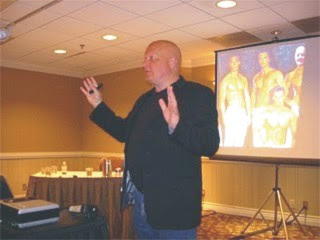
Steve explains how he's taken time from his regular job with the "Thunder From Down Under" dance group in Las Vegas to work with PICA.

Steve takes a holistic approach to corporate communications. Generally, a company's needs to communicate are generated by policy, programs or procedures...but it's all really about people. The best companies use their publications to build communities of people.

Steve's presentation reminded us that any time we put pen to paper - or fingers to keyboard - we have to ask ourselves, "Is this worth doing?" Does the message we need to get out there have a benefit to the organization or to the audience? If not, maybe we shouldn't write it. Steve asked us, "Do you want to be seen as strategic communicators, or do you want to be Julie from the Loveboat?" Before you Loveboat fans get offended, consider that our purpose as corporate communicators isn't to give the audience what they think they want. Our purpose is to give our audience what they need to do their jobs and make contributions that benefit the organization.

Steve illustrated his points through our own publications that we submitted to him prior to our workshop. While some may squirm just a little when their publication is up there on the projection screen, I crave this kind of criticism and really welcomed the feedback, so everytime I saw something from my company appear on the screen, good or bad, I was psyched. To have specific feedback from someone like Steve is a huge benefit of PICA's workshop setting - we actually get to interact with writing experts and see our work through fresh eyes. (Hint: if you didn't submit something this year, do it the next time we have a session like this! You'll really increase your company's return on the investment it made by sending you to our workshop...)

A few examples of the kinds of specifics Steve touched on that we could fix right away:

Write better headlines! Putting words above an article in a larger font doesn't make it a headline. Use verbs to create movement and energy. And don't write the headline last...write it early on in the process while your enthusiasm is high and let that theme lead the article.

Give your publications credibility. How does it benefit your company's objectives to write about how a retiree plans to fish or (surprise!) relax upon retirement? Or to include articles that talk about an employee's favorite recipe or about household issues? While these topics may seem like they're contributing to the human element of your publication, they're really just fluff. Punch it up and include things that will increase your company's overall success. For example, in an interview with a retiree, ask, "What is the one thing you've always done to promote good service?" Now, that is a parting thought that shows a person's value and can benefit those who continue to work for the organization. Or, ask someone else for a story or quote about that person to illustrate the kind of worker they are.

Good writing is talking edited. Given that, when we construct long quotes that our executives supposedly said that sound nothing like talking, it's obvious! And awkward.

While the session was packed with information, we laughed a lot, too. Whether we were giggling over Crescenzo Communications IT Department, or learning how to play Buzzword Bingo, Steve did a great job of keeping the energy high and the mood light. An outstanding session!

Workshop Summary - Michael Wilder Adjusts PICA's Social Media Mindset

During our 2010 Workshop, Michael Wilder opened our eyes to the possibilities of how social media and networking could impact a business. Michael is a Learning Technologies Specialist at the University of Nevada, Las Vegas. Past PICA Chairman Kirsten Amspaugh gives her account of Michael's time with us:

Michael Wilder opened his super-informative session by assuring us that he wasn't there to convince us one way or another about whether we should include social media as a part of a communication strategy for our companies. However, by the end of his session, I think most of us felt that in order to move our organizations forward, we needed to think long and hard about using social media effectively.

Michael describes how social media can be used to generate energy about a group or product.

Since many people look at Facebook and Twitter as places to play on the Internet, why should we consider using them as tools to promote something as serious as insurance? Michael made two great points - first, that the idea of marketing has always been to cast our nets as far and wide as we can to catch the most possible fish. Second...social media is FREE! The only investment we are required to make when using it is our time.

So, how could social media help a business? Well, it's as simple as the concept of word of mouth: user reviews of a product can influence the purchases of their friends. Social media sites give companies an opportunity to establish an approachable identity online. Users can view the preferences of people they trust or admire and then rely on friend recommendations instead of only having the "company spiel" as a source of information.

What is attractive about social media? It's immediate, selective and easy to use. It allows people - even amidst the hustle and bustle and noise - to connect with authenticity.

Michael used Zappos as a case study to show us how one company has used social media to promote its products, connect upper management to the public, and create an online identity that is personal, approachable and likeable.

One concern I had as an insurance communicator was, "Do we have an obligation to respond if someone posts a comment to our corporately sponsored social media site?" Michael says that the obligation to respond isn't there, but a marketing opportunity exists when we do. Trends in posts can reveal where we need to improve. "You're saying, 'We're going to be dedicated to improving our service'...that is the only obligation you're creating with your online presence," Michael explained.

An additional thought Michael shared is that some businesses hesitate to have an online presence because they don't want to create a place where negative comments can collect and dwell. "Just because you don't have an account doesn't mean people aren't communicating. Negativity can be revealed anyway," he explained. But when we have a specific place online for communication to happen, we do have more control because we can see the comments and do something about them, whereas without a presence, we may or may not see the comments...and we'll miss the opportunity to improve service.

You can review portions of Michael's presentation to PICA and see the video he shared with us illustrating the prevalence of social media here.

Tuesday, June 15, 2010

Workshop Summary - Harlan Amborn Shows PICA the Future of Insurance


Here is Assistant Secretary & Treasurer Janet Wright's account of Harlan Amborn's presentation! Harlan is the Deputy Commissioner for the Nevada Department of Insurance.

PICA Keynote Presentation Melds Industry Past and Present to Face the Future

Using lessons of the past to deal with the future was the theme of PICA Workshop Keynoter Harland Amborn’s presentation, “Changes in Insurance -- Past, Present and Future.” He entertained his audience with print ads and TV commercials from the past to illustrate changes to insurance industry exposures through evolving products, services and human issues. Amborn is deputy commissioner of the Nevada Division of Insurance, Las Vegas.


“In a relatively short time – just a few decades -- our world has changed so radically. For instance, consider the changes we’ve experienced in products we use, dangers we face, skyrocketing monetary values of the things we insure, a reeling (and hopefully recovering) economy, and global exposure,” he explained. “These are just a few of the issues we deal with. As insurance people and communications practitioners, understanding the evolution of our world is essential to facing future challenges.”


Examples of future technology that may provide exposure to the insurance industry include:

• Commercial space travel – the first suborbital commercial transportation is predicted to blast off from Orlando, Fla. by 2015.
• Cloning – “Select-A-Child” science opens the possibility of choosing a child who is not compatible with the rest of the family or its siblings.
• Robots – damages may be incurred when a robot is programmed incorrectly for its intended purpose.
o Computerized insurance surveillance (“black box” technology) – Automobiles – measuring everything from mileage and speed to driver habits and/or errors;
o Homes – ability to determine technologically if a dwelling is secured or unsecured, vacant or occupied, regardless of what the policy owner reports.
• Life insurance – embedding “tracking chips” into individuals to know where they are, what they are doing, and when.
• Health insurance – using tracking chip technology to monitor use of medication, lifestyle, and behavior that may endanger health and generate claims.
• “Thinking Caps” – mandated by employers, for instance, so that others can monitor an individual’s thoughts.

“These examples may seem completely absurd, but the technology is already being tested,” Amborn said. “At one time, landing on the moon was absurd, too. The future is happening as we speak, and the insurance industry must be ready to deal with it. As communicators, you need to be aware of the possibilities so you’ll be ready to communicate them for your management and your industry.”

Wednesday, June 9, 2010

Workshop Summary - Sharon Exharos Makes PICA Think Green

Good morning, PICA! In keeping with our promise to recap our annual workshop, here is a post from Vice Chairperson, Becky Marshall. She's summarizing our session with Sharon Exahros of Realty Executives of Nevada.
Communicating Green in the Workplace
During this session of the PICA workshop, Sharon Exarhos of Realty Executives of Nevada shared numerous ideas of communicating green to Company employees, agents, policyholders and community residents. During her presentation, Sharon provided the group with a “green” checklist to take back to the office to conduct our own green audit within our companies. PICA members also discussed green initiatives already taking place within their own companies.
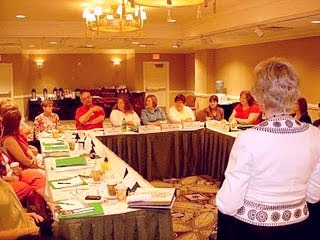
At the conclusion of Sharon’s presentation, workshop attendees were excited about taking new “green” ideas back to their home offices to incorporate in their internal and external communications.


Thanks, Becky! Of course, there are lots of ways your company can adopt green practices to improve its carbon footprint. But for attendees looking for ways to get their companies more involved in their communities, Sharon's presentation and our conversations after definitely inspired. Consider increasing your company's green awareness and helping your neighbors practice conservation:
Host a shredding day at your company's headquarters. Allow a mobile shredding service to set up a station in your parking lot on a weekend or after work hours. Advertise locally that you'll shred a certain amount of paper per person for free. Not only does this help encourage recycling, but also helps reduce identity theft.
Work with a local school and invite students to give your business a green evaluation. It's a great way to uncover simple practices your business can adopt and it encourages a good relationship between your business and local schools.
At a scheduled time, allow your neighbors to drop off hard to dispose of items such as paint cans and chemicals or light bulbs containing mercury. Work with a local hardware store or contractor for haul away services, then plan a time to allow neighbors to drop off these substances that are harmful to the environment.

Think about developing a committee within your company to brainstorm green ideas and use Sharon's guide as a starting point. Go green!

Tuesday, June 8, 2010

Workshop Summary - Marko Sakren Opens the Box

Hello, PICA People! We recap the presentations of our speakers to help refresh your memory about what you learned in the workshop. One user tip is to forward a link to this blog to any of your work colleagues who might benefit from the information...this is a great way to share the information you learned, making your workshop tuition dollars go even further!

Today's recap is from Vice Chairperson, Becky Marshall. She's recapping our session with Marko Sakren of Red Rock Media Group, Inc.

Thinking Outside the Box…Without Missing the Target

Each of us around the workshop table takes a turn reciting our name, company name and job duties. We tick off our laundry list of job duties: brochure design, newsletter writing, event planning, presentation development, advertising, community support…the list goes on-and-on for the group of us participating in the 2010 PICA Communications Workshop held in Las Vegas last month.

What the group discovered during this exercise was that in our positions, we are responsible for a slew of duties that can become quite challenging at times. Once it becomes overwhelming, we tend to spread ourselves thin…and, as a result, creativity goes right out the window.

Marko plays "Name That Product" with Carol, Carol and Rick to help them break out of their usual methods of thinking.

Workshop speaker Marko Sakren of Red Rock Productions shared with us some ideas on how to think outside the box…without missing the target. What exactly does this mean? To put it simply, as insurance communicators, we must learn to step outside of our comfort zone when it comes to communicating…in both the written and spoken word. At the same time, we must continue to meet our targets (i.e. deadlines, budgets and approvals from co-workers, supervisors, executive management).

During this session of the workshop, PICA workshop attendees explored ways of communicating to publics in a more creative and entertaining manner. We learned that once we step outside the comfort zone and begin thinking outside the box, it is necessary to identify some of the challenges we face that prevent us from fully fulfilling our responsibilities as communicators. During his presentation, Marko offered the group suggestions on how to overcome some of those challenges and ways to implement solutions back at the home office.

Marko’s presentation material sparked dynamic conversation between PICA attendees. In the conclusion, the group discovered that if small steps are taken to think outside the box, our communications will develop into more creative and effective pieces without missing the target.

Wednesday, May 26, 2010

Thank You!


Thanks to everyone who made our 2010 workshop a HUGE success...Wow!!

Whether you contributed by attending the conference, sharing your ideas, providing feedback or presenting information, THANK YOU.

Your efforts increased our abilities and our skills...this renewed enthusiasm will help us to communicate our ideas more professionally and effectively.

We also thank members who were unable to attend this year. Your continued support - along with the support of your company - keeps PICA going. We hope you're able to attend in 2011!

Stay tuned for updates over the next week. We'll give you a recap of each presentation so you can share this information with your colleagues!